November Skies – Stars, Meteors and Moonlight
The Sky This Month – November 2026
November has arrived, with shorter days, colder evenings, longer nights and some interesting astronomical events to look forward to.
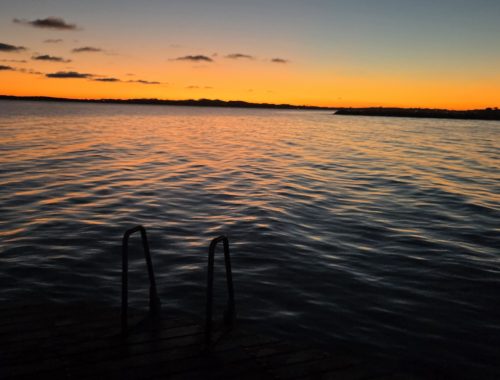
Here in Sønderborg, the days are getting noticeably shorter, week by week. Last week I had to turn on my bike lights after work. Next week, I’ll probably need them in the morning too. The sun sets earlier and earlier, and by late afternoon, darkness is already settling over the countryside and coastline.
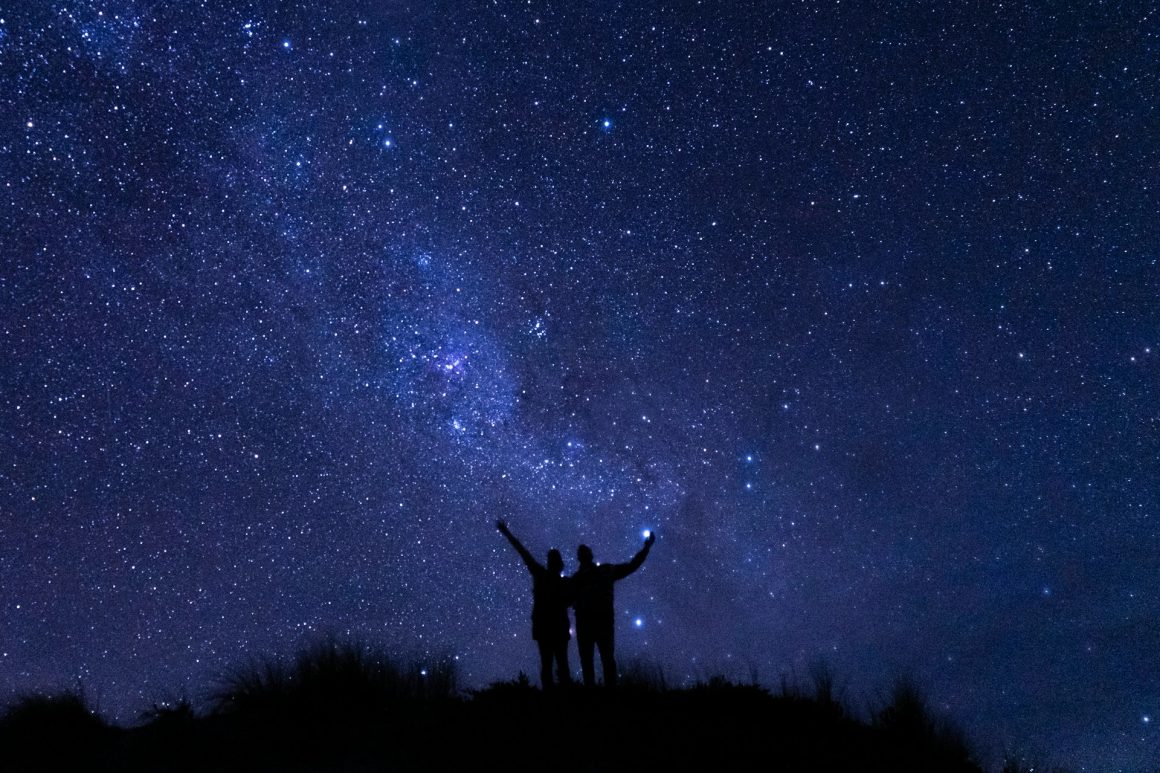
I like this time of year very much. There is something special about looking up at a clear autumn sky, particularly when you live somewhere with relatively little light pollution. A warm coat, a little patience and somewhere dark is all you need to enjoy the stars.
And November 2026 has quite a few things worth looking out for.
Shooting Stars – The Taurids and Leonids
November brings several opportunities to see what we all like to see: shooting stars!
The first are the Southern Taurids, which are coming up in a few days, around 4–5 November. Unlike some meteor showers, the Taurids don’t produce hundreds of shooting stars. Instead, they occasionally produce spectacularly bright meteors, also known as fireballs.
Man, I really look forward to those!
The Northern Taurids follow around 11–12 November. This year, the timing is particularly favourable because the Moon will be only a thin crescent, leaving the night sky relatively dark.
Both meteor showers can be seen from Denmark and Northern Germany, so all we need now is a clear sky. That might actually be the biggest challenge in November!
Around 17–18 November, we have the Leonids, a meteor shower created by tiny particles left behind by Comet Tempel-Tuttle. These meteors travel incredibly fast and can leave bright streaks across the sky.
The Leonids are probably not for me, though. They are best watched during the early morning hours, when the constellation Leo is higher in the sky.
I enjoy astronomy, but I also enjoy my sleep.
The Moon – From Darkness to a Supermoon
November begins with a waning Moon, leading towards the New Moon on 9 November.
The days around the New Moon are particularly good for stargazing, simply because there is less moonlight to interfere with the view. If we get a few clear nights, it should be possible to see some of the fainter stars and perhaps even the Milky Way from a sufficiently dark location.
On 24 November, we have a Full Moon, and this one is also a supermoon.
A supermoon occurs when the Full Moon is relatively close to Earth in its orbit, making it appear slightly larger and brighter than usual. The difference isn’t always obvious, but I think a Full Moon rising over the sea is a beautiful sight regardless of its distance.
In North American traditions, November’s Full Moon is often called the Beaver Moon, a name associated with the time when beavers prepare for winter.
I find these old names rather interesting, although I would love to learn more about the traditional names and beliefs surrounding the Moon here in Scandinavia.
After all, our ancestors followed the Moon and the changing seasons long before anyone had a smartphone telling them when the next Full Moon would appear.
Mars and Jupiter – An Early Morning Meeting
On 16 November, Mars and Jupiter will appear unusually close together in the sky.
They can be seen towards the south-east before sunrise. Jupiter is the brighter of the two, while Mars has its characteristic reddish-orange colour.
The planets will appear close enough to fit into the same field of view through an ordinary pair of binoculars, although they are actually millions of kilometres apart.
You won’t need a telescope, and if you’re already up early, this could be worth looking out for.
Personally, I might just take a quick look if I happen to wake up early. Otherwise, the planets will have to manage without me.
Saturn, Venus and the Returning Winter Stars
Fortunately, not everything interesting happens in the middle of the night.
Saturn is still visible during the evening throughout November. Look towards the southern sky after sunset, where the planet appears as a steady, slightly yellowish point of light.
Venus is becoming increasingly bright in the morning sky, particularly towards the end of the month. Look low towards the east or south-east before sunrise, preferably somewhere with an unobstructed horizon.
And then there are the winter constellations.
Orion is returning to the evening sky, becoming easier to spot later in November. Its three bright stars forming Orion’s Belt make it one of the easiest constellations to recognise.
Another favourite is the Pleiades, also known as the Seven Sisters. This little cluster in the constellation Taurus looks almost like a tiny, sparkling cloud. You can see several of its stars with the naked eye, but a pair of binoculars reveals many more.
I like the fact that the constellations return year after year. The stars themselves have barely changed during our lifetimes, but our view of them changes with the seasons as Earth travels around the Sun.
There is something quite reassuring about that.
Under the Southern Jutland Sky
One of the things I appreciate about living here is having the sea and countryside so close by.
I don’t have to travel very far to find somewhere reasonably dark, away from the brightest streetlights. A quiet spot along the coast can be a lovely place to watch the night sky, particularly when there is a clear view across the water.
Of course, this is Southern Jutland in November. We might get beautiful clear evenings, but we are just as likely to get clouds, rain, fog and a rather unpleasant wind coming in from the Baltic Sea.
That’s life here, and I wouldn’t change it.
I don’t own an expensive telescope, and I certainly don’t know the names of every star and constellation. But I do enjoy watching the sky and learning a little more about what is going on above us.
That is also why I have decided to make The Sky This Month a regular feature here on Sea, Soil, Sky.
Every month, I’ll take a look at the astronomical events we can actually observe from Southern Jutland and Northern Germany. No spectacular eclipses visible only on the other side of the world, thank you very much!
Just the Moon, the planets, the stars and whatever else might be happening above our little corner of Northern Europe.
So, if we get a clear evening this November, put on a warm coat, find somewhere dark and look up.
You never know. We might just catch a shooting star.

A November Sea Swim